
Types of charcoal
Charcoal can be broadly divided into three types.
Each type has different characteristics based on the manufacturing method and the type of wood used as raw material.
Black Charcoal / Wood Charcoal
Black charcoal is easy to ignite, emits strong heat and is elegant. Made from wood such as eucalyptus, lychee and acacia, cinnamon, mangrove, it burns slowly at a temperature of 400-800 degrees, after the carbonization process is complete, the air entering the charcoal furnace will be cut off and the flame will go out. Compared with white charcoal, this type of charcoal has a shorter burning time, but it ignites quickly, is easy to handle and emits strong heat. You can also add a strong charcoal flavor by dripping grease from food onto the charcoal.
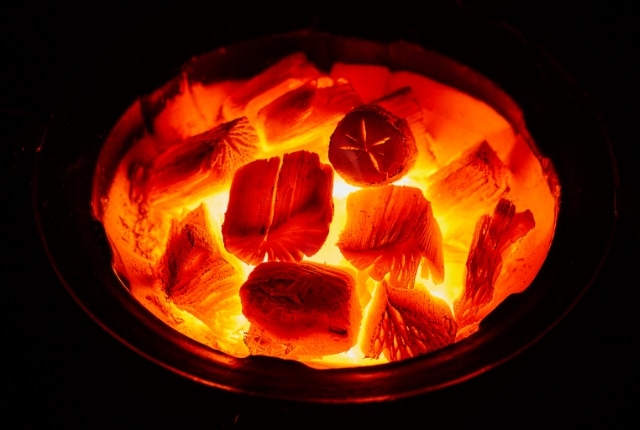
White Coal/BinChoTan
White charcoal (BinChoTan) is hard, burns for a long time and has adjustable temperature. This type of charcoal is made by slowly carbonizing raw materials such as eucalyptus wood, maitieuw wood, longan wood, coffee wood, grapefruit wood in a charcoal kiln, then blowing air into the kiln and burning it at a temperature >1000 degrees in a finishing process called “nerashi”, then pouring a mixture of ash and sand called “sohai” on top and quickly extinguishing the fire. White charcoal is as hard as metal so it is difficult to ignite and will explode if heated suddenly, but once stabilized, the charcoal will burn for a long time and the temperature can be easily adjusted from low to high with just a fan. Among them, domestically produced binchotan charcoal is used in high-quality restaurants around the world.

Frequently asked questions
There are three main types of charcoal: black charcoal, white charcoal/binchotan, and sawdust, and they are made using different methods and different types of wood.
Each type has different characteristics when burning (burning time, amount of ash, ease of ignition, etc.).
The key to making binchotan less likely to explode is to gradually heat the charcoal itself and gradually transfer the fire. When lighting the gas stove, do not heat the binchotan over high heat all at once. Instead, heat it over low heat first to release the water vapor inside. Then gradually increase the heat to light the entire charcoal.
If you are adding charcoal during business hours, warm the charcoal by placing it away from the source of the fire in the furnace beforehand. Take your time and slowly move the binchotan closer to the source of the fire and gradually transfer the fire. Also, charcoal with knots or cracks in the wood is more likely to explode. It is also important to avoid such areas and arrange the charcoal so that the fire comes into contact with the smooth parts of the charcoal surface.Since charcoal is constantly breathing, please avoid storing it in a humid place as it may cause an explosion. Please be mindful of the safety of those around you when using it.
Low-quality charcoal is poorly carbonized and contains impurities, which when burned will produce smoke and an unpleasant odor even before the food is grilled. On the other hand, high-quality charcoal will not produce any odor or smoke even at the fire-starting stage.
So what is the “good smell of charcoal grilling (charcoal aroma)”? A typical example is the smoking effect. When food is grilled over charcoal, the fat and sauce drip onto the charcoal, which heats up and turns into mist (smoke).
The smoke clings to the food and smokes it, giving it the “charcoal grilling aroma.” Ash also contains minerals, so when the ash floats around and sticks to the food, it enhances its flavor and aroma.